


The National Drug Law Enforcement Agency (NDLEA) and the Australian Federal Police (AFP) have signed an agreement to dismantle transnational drug trafficking networks operating along the Nigeria-Australia route.
The Memorandum of Understanding (MoU), signed on Monday in Abuja, formalises existing cooperation between the two agencies into a structured strategic alliance.
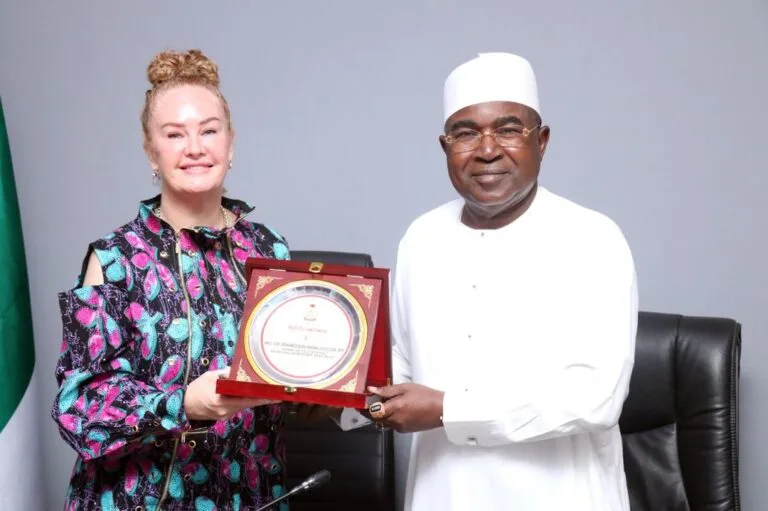
NDLEA Chairman, retired Brig.-Gen. Buba Marwa, described the agreement as a declaration of war against international drug cartels.
Speaking at the ceremony, Marwa said the partnership would make the Australia-Nigeria drug route increasingly hostile and unprofitable for traffickers.
He expressed confidence that the AFP’s global reach and the NDLEA’s operational capacity would strengthen their joint efforts.
Marwa said drug trafficking had become increasingly transnational, organised and sophisticated, making stronger international cooperation necessary.
He noted that Nigerian organised crime groups were increasingly linked to the Australia-Pacific drug route, particularly through methamphetamine and cocaine trafficking.
“Nigeria is being exploited as a transit and sourcing hub, but no single country can fight this alone,” he said.
He expressed hope that the agreement would lead to major joint seizures, the arrest of high-value targets and successful controlled deliveries.
Marwa called for the immediate implementation of the agreement, which provides a renewable framework for sustained cooperation.
He cited recent operations that demonstrated the scale of the threat and the need for stronger international partnerships.
These included the seizure of 184.5 kilogrammes of cocaine destined for export and the dismantling of four methamphetamine laboratories.
He said Mexican nationals were found operating within the laboratories, with one operation resulting in seizures valued at more than 360 million dollars.
Marwa also highlighted the dismantling of a Switzerland-based cartel allegedly led by a Nigerian, Simon Amadi.
He said the operation followed more than a year of collaboration with the United States Drug Enforcement Administration (DEA) and the police in France, Greece and Switzerland.
According to him, the cartel’s assets in Nigeria had also been targeted.
The Head of the AFP delegation, Ms Sandra Booth, described drug trafficking as a whole-of-society problem requiring a coordinated response.
Booth commended the NDLEA for tackling the menace through prevention, enforcement and international partnerships.
She said the agreement would serve as a “force multiplier” in combating what she described as an abhorrent trade.
She warned that organised crime groups were increasingly using drug trafficking to finance other serious offences through a “crime as a service” model.
Such activities, she said, involved recruiting young and vulnerable people to deliver drugs, transport illicit substances and carry out violent attacks against rivals.
Booth said the consequences went beyond addiction, destroying families, destabilising communities and fuelling gang violence and deaths in Australia.
“Whilst Nigeria is a transit country, we are a destination country. And unfortunately for us, people will pay a lot of money for the commodity,” she said.
She said Australia was committed to preventing drug trafficking into the country and protecting young and vulnerable people.
Booth stressed the importance of teamwork, integrity and sustained commitment in tackling international drug networks.
“I am very proud that we can now be part of your pack,” she said.
The Australian High Commissioner to Nigeria, Ms Leilani Bin-Juda, witnessed the signing alongside the Deputy High Commissioner, Timothy Milikan.
Other AFP delegates included Andrea Humphrys and Susan Gray, while senior NDLEA officials also attended.
The News Agency of Nigeria (NAN) reports that the agreement identifies four priority areas of cooperation: intelligence and information sharing, joint operations, capacity building and professional development, and controlled delivery.