

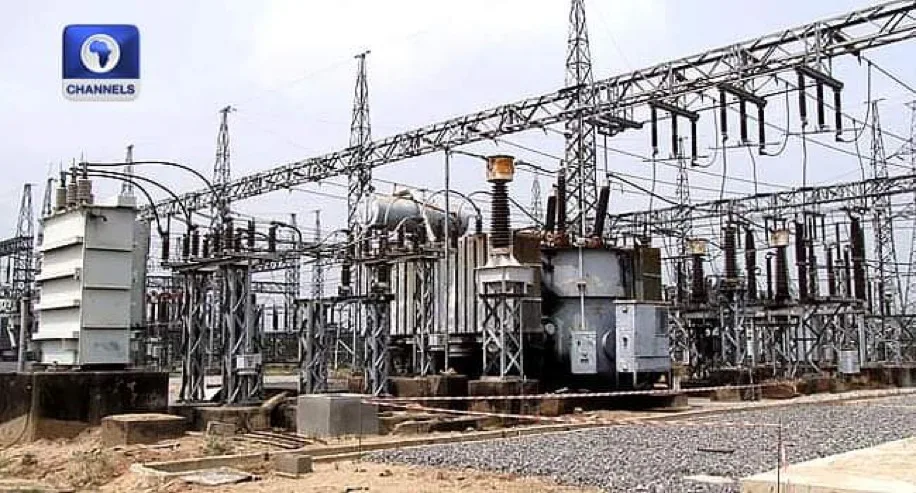
The Nigerian Independent System Operator (NISO) has attributed the recent decline in electricity generation across the country to inadequate gas supply to thermal power stations and reduced output from hydroelectric power plants.
The operator disclosed this in a public statement issued on Thursday, November 5, 2026, explaining the factors responsible for the declining power generation on the national grid.
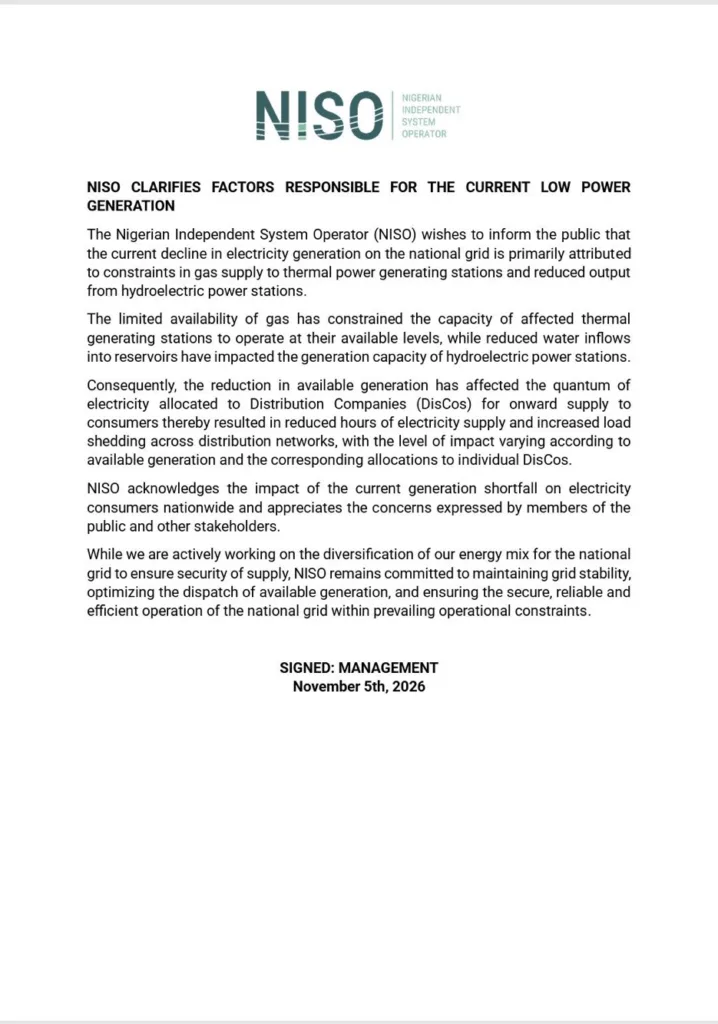
According to NISO, limited gas availability has prevented some thermal power stations from operating at their available capacities, while reduced water inflows into reservoirs have affected the generating capacity of hydroelectric plants.
The operator explained that the combined challenges have reduced the total electricity available on the national grid, consequently affecting the volume of power allocated to electricity distribution companies (DisCos).
It noted that the reduction in available generation has resulted in fewer hours of electricity supply and increased load shedding across distribution networks.
NISO added that the impact of the generation shortfall varies across different parts of the country, depending on the available electricity and the allocation received by individual distribution companies.
Acknowledging the difficulties faced by electricity consumers nationwide, the system operator expressed concern over the situation and appreciated the concerns raised by members of the public and other stakeholders.
The operator further disclosed that efforts were ongoing to diversify the country’s energy mix to strengthen electricity supply security and reduce dependence on existing generation sources.
NISO reaffirmed its commitment to maintaining grid stability, optimising the distribution of available electricity and ensuring the secure, reliable and efficient operation of the national grid despite the prevailing challenges.
The development comes amid growing concerns over unstable electricity supply, with households and businesses across the country facing increased dependence on alternative power sources.