

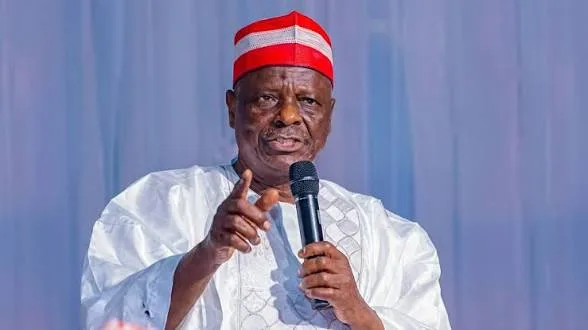
The Kwankwasiyya Movement has raised eyebrows over proposed N55 billion Local Government loans in Kano State, demanding transparency and accountability during the transaction.
The Kwankwasiyya Movement expressed serious concern over reports that the Kano State Government intended to compel the 44 Local Government Councils in the State to undertake loan obligations reportedly amounting to approximately ₦55 billion from a leading commercial bank.
Spokesperson of the Movement, Dr. Habibu Saleh Mohammed, in a statement, revealed that, “according to the information available to us, each Local Government Council may be required to assume a financial obligation approaching ₦1.3 billion, with the proceeds reportedly earmarked for the establishment of Computer-Based Testing (CBT) centres, an unspecified project, and an empowerment programme.
“While we recognise the importance of educational infrastructure and economic empowerment, these objectives must be pursued through transparent, lawful, and financially responsible arrangements that protect the interests of the people.”
Dr. Mohammed noted that: “Our fundamental question is: Why should the 44 Local Government Councils be compelled to assume substantial debt obligations for projects reportedly to be administered by the State Government, rather than being allowed to exercise independent judgment over their financial priorities and development needs?
“The reported timing of this proposed borrowing raises legitimate questions, particularly with the approaching electoral cycle. Why is a loan of this magnitude necessary at this particular time, and what evidence demonstrates that the proposed projects cannot be funded through existing budgetary provisions and available public revenue?”
He maintained that Kano State and its Local Government Councils receive public revenue from statutory allocations and other lawful sources, adding that the State Government must therefore explain its revenue position, existing financial commitments, and the justification for imposing additional debt obligations on local councils.
“We are not alleging that the proposed loan is intended to finance an election. However, the timing makes it imperative that adequate safeguards be established to ensure that the proceeds are used exclusively for approved public projects and are not diverted, directly or indirectly, to partisan political activities.
“Public borrowing must be driven by demonstrable development needs, not electoral considerations or political convenience,” he stated.
According to him, the reported breakdown includes approximately ₦632.57 million per council for a CBT centre, ₦500 million for an unspecified project, and approximately ₦117.41 million for an empowerment programme, subject to verification against the original documents.
“We demand a detailed explanation of these allocations. Where will the CBT centres be located? Who conducted the feasibility studies and cost assessments? What exactly is the project carrying an allocation of ₦500 million, and why has its description not been made public? How many beneficiaries will benefit from the empowerment programme, and what mechanisms will ensure transparent selection and disbursement?
“No Local Government Chairman should be expected to sign a financial obligation of this magnitude without understanding its full legal and financial implications,” he stated.
Dr. Mohammed further demanded a comprehensive account of the funds reportedly contributed or released by Local Government Councils to the State Government under the joint empowerment programme, particularly the monthly women’s empowerment initiative.
“How much did each council contribute from the inception of the programme? What was the total amount received by the State Government? How much was actually disbursed to beneficiaries, what administrative expenses were incurred, and what happened to any remaining balance?
“Why did the programme reportedly operate for fewer than ten months despite the expectations created around its continuation?” he queried.