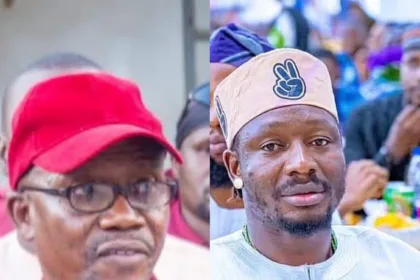


There are evenings that end when the lights go out, and there are evenings that continue long after one has returned home because the conversation has left questions behind. My last Thursday evening in Lagos belonged to the latter. I spent the evening with Governor Babajide Olusola Sanwo-Olu, his Deputy, Dr. Kadri Obafemi Hamzat, and a handful of young Nigerians, discussing governance, public policy, infrastructure, innovation, and the place of young people in the business of governing a city that has long outgrown its geographical boundaries. It was a relaxed conversation, but beneath the light-hearted exchanges was a serious question of what it takes to govern a city whose success has become one of the reasons it is increasingly difficult to govern.
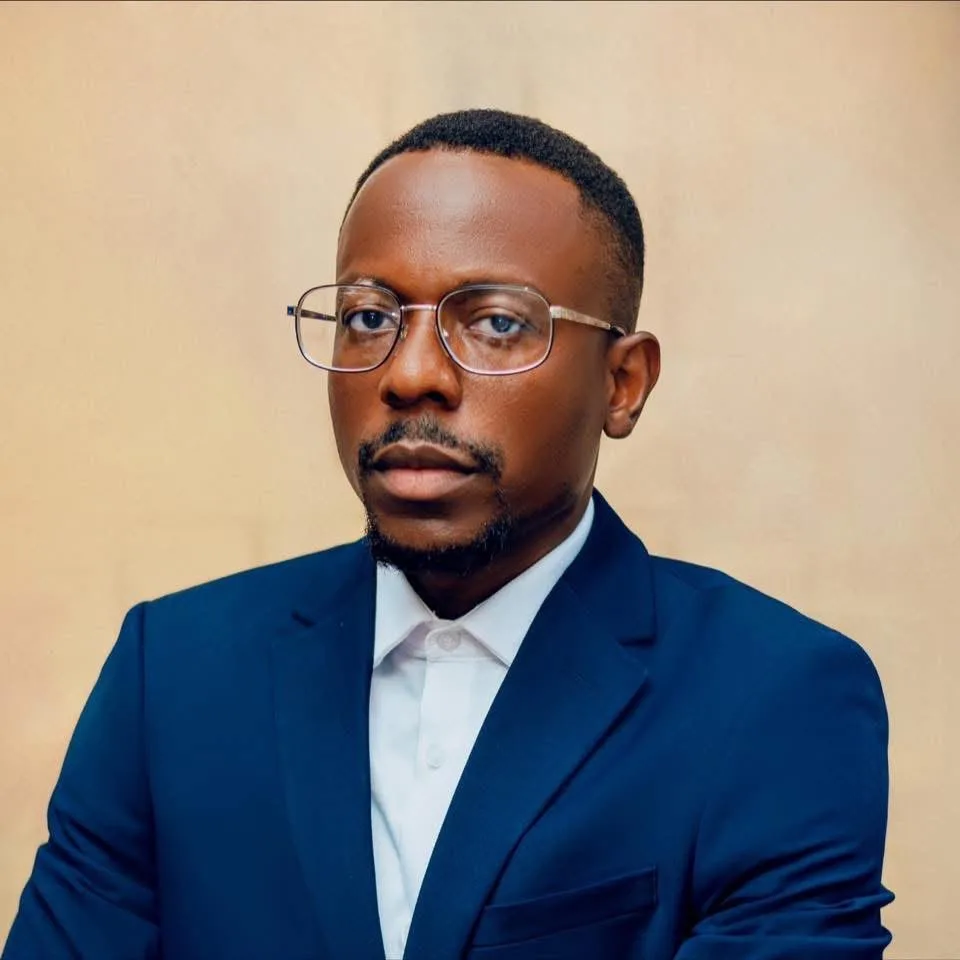
I have a particular interest in that question because Lagos and Ogun occupy unusual places in my imagination. I was born (in Agege) and raised in Lagos, with Agbado Station forming part of the geography of my upbringing, yet I am a native of Ogun State. I therefore look at the two states with something more intimate than the detached curiosity of an observer. One is the city that raised me; the other is the state to which I belong. That makes Lagos difficult for me to romanticize and Ogun impossible for me to ignore.
Lagos is not a perfect state. Its traffic can be punishing, its housing pressures are severe, its infrastructure is constantly under strain, and the sheer density of human activity creates problems that no administration can wish away. However, after listening to the Governor and his Deputy, one thing became clearer to me: Lagos has developed the institutional ambition to confront its problems at a scale commensurate with the problems themselves. Other states could learn a great deal from that ambition alone.
Mr. Sanwo-Olu knows Lagos with the familiarity of a man who has spent years studying the machinery of the city. As he moved from one project to another, naming locations, interventions, and the reasoning behind them, it became apparent that governance at this level cannot survive on intuition alone. Dr. Hamzat, whom I jokingly came to regard during the evening as the “data man,” approached the same questions through numbers, ratios, and movement patterns. Between the political knowledge of the Governor and the statistical instincts of his Deputy was a useful lesson: a megacity cannot be governed adequately without knowing both its people and its numbers.
Lagos has a peculiar geography. It occupies only about 3,345 square kilometers, yet it carries an enormous population and an economy that attracts people from virtually every part of Nigeria. Its success is therefore also one of its burdens. Lagos has become a magnet for people seeking employment, enterprise, education, visibility, and prosperity. The city’s population pressure is not simply a failure of planning; it is, in part, the price of being Nigeria’s most powerful economic magnet.
That is why traffic in Lagos should not always be discussed as though it were simply a road-construction problem. It is a metropolitan mobility problem. The question is not only how many roads can be built, but how efficiently millions of people can move across a constrained geography every day. This was one of the more interesting aspects of the conversation. Dr. Hamzat spoke about the need to unlock Lagos’s waterways, expand rail transportation, and continue improving the road network. The logic is compelling. A city surrounded and intersected by water cannot afford to treat its waterways as decorative features. Rail, road, and water must operate as parts of one metropolitan transport system.
The Red Line embodies that thinking. The rail corridor linking Agbado to Oyingbo, twenty-seven kilometers, with a planned extension to Marina that will bring the fuller route closer to thirty-seven, is designed to provide an alternative to road transportation and improve movement along one of the busiest axes into Lagos. The Blue Line, running from Marina towards Okokomaiko, represents another attempt to make rail a central component of the city’s transportation architecture. The significance goes beyond the trains themselves. When a resident of a distant suburb can move towards the commercial heart of Lagos without spending a disproportionate part of the day trapped in traffic, infrastructure has ceased to be concrete and steel. It has become economic policy.
This is where the sentence I kept returning to from the evening becomes important. Politics is policy, policy is governance, and governance is ultimately economic management. A city’s transport network is, in effect, a ledger of who gets to work on time, who can afford to live near opportunity, and who is quietly priced out of both. Government therefore cannot be judged only by the number of projects it commissions, but by whether those projects alter the economic possibilities of ordinary people.
Lagos’s health investments provide another example. The state has been developing the Lagos State Mental Health Institute and Psychiatric Rehabilitation Centre at Ketu-Ejinrin, a major investment in an area of healthcare that governments across Nigeria have historically neglected. The significance is not simply the size of the facility, but the willingness to treat mental healthcare as part of mainstream public policy. My own time working in Glasgow’s addiction and crisis services (Turning Point Scotland) taught me what happens when mental health is treated as peripheral rather than integral to public health: the consequences fall on families and communities long before they show up in any government statistic. Mental health is therefore not a luxury to be remembered when a crisis becomes impossible to ignore. It is a public-policy responsibility, and a society that neglects it will eventually confront emergencies that could have been prevented far more cheaply than they will now be managed.
Lagos has also demonstrated that crisis can expose institutions, but it can also test them. During the COVID-19 pandemic, Lagos was the Nigerian epicenter of the outbreak and consequently faced an extraordinary public-health challenge. The state’s response drew recognition from the World Health Organization, which highlighted its incident-command structure and use of public-health resources in managing the crisis. That experience matters because governance is tested most severely when normal administrative routines collapse.
The same city suffered enormous destruction during the violence that followed the #EndSARS protests. Public transport infrastructure was among the casualties, alongside public and private property. The episode remains an important part of the Lagos story because a serious assessment of governance must contain both the ledger of achievements and the ledger of failures, losses, and unfinished business. Otherwise, analysis becomes public relations. The state’s response to the destruction, questions surrounding compensation, and the wider controversy over the handling of the protests remain part of the accountability burden that no amount of infrastructure can erase.
Yet Lagos continues to move, and that is perhaps its most instructive quality. Its challenges are not evidence that governance has failed; some are evidence of the extraordinary pressures produced by the city’s economic success. The more people Lagos attracts, the greater the pressure on its roads, housing, water, waste-management systems, schools, hospitals, and security architecture. Success creates new problems, and competent governance must continually evolve to meet them.
This is where Ogun enters my thinking. February 6, 2027, will decide something more than a name; it will decide whether Ogun keeps warehousing its ambitions for others to cash in on, or finally banks them itself. The state that hosts the cement kilns of Ewekoro and Dangote’s operations around Ibese has never lacked industry. What it has lacked is proof that the industry belongs to Ogun as much as it belongs to the men who own the factories. Whoever succeeds Abiodun — Adeola or Adebutu — inherits a single, testable promise: Lagos has confirmed it is in talks to extend the Red Line into Ogun State. If that line is built, it will be the clearest evidence yet that Ogun has stopped being Lagos’s commuter suburb and started being its partner. If it dies in committee, as so many cross-border Nigerian infrastructure promises do, it will confirm what Ogun’s neighbors have long suspected: that proximity to greatness is not the same as sharing in it.
A handful of our Southwestern states need less political noise and more measurable proof. Which government builds institutions that outlive the politician who built them? Which one moves its people rather than just promising to? Which one turns nearness to Lagos into shared prosperity instead of a one-way road out of the state? The Southwest’s next political contest should not be won by whoever shouts loudest about vision, but by whoever can be held to a date and a delivery.
My Lagos evening was therefore more than an evening with a Governor and his Deputy. It was an encounter with a city still wrestling with the consequences of its own success, and with a governing philosophy that increasingly recognizes that the problems of a megacity require megacity solutions. Lagos has not arrived, and pretending otherwise would be intellectually lazy. But a city does not become instructive because it has solved every problem. It becomes instructive when its institutions possess the capacity, ambition, and self-awareness to keep confronting the problems that success creates.
Lagos has shown that constraint is not an excuse. The rest of the Southwest has none left either.
The conversation does not end here. You can continue it with me on X via @folorunso_adisa, LinkedIn: Folorunso Fatai Adisa, or on Facebook at Folorunso Fatai Adisa.